Categories
Featured Updates

New USCIS Memo on Adjustment of Status: What It Actually Says — and What the Press Release Got Wrong

Share this:

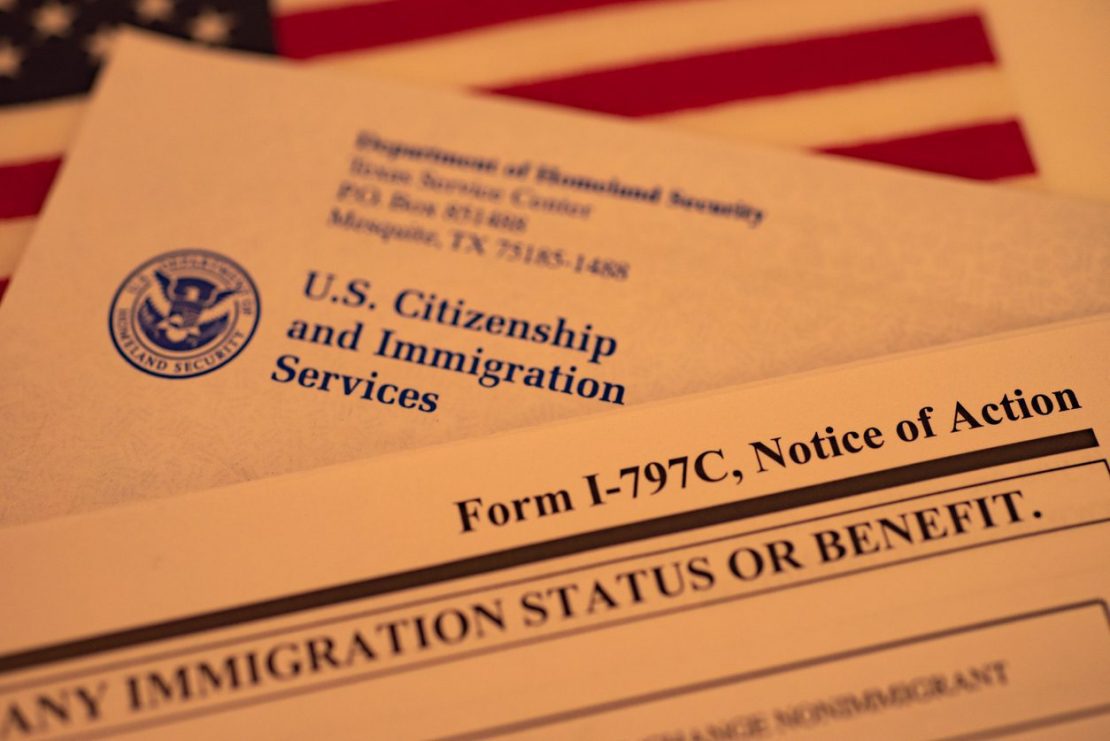
On May 21, 2026, U.S. Citizenship and Immigration Services (USCIS) issued Policy Memorandum PM-602-0199 — a directive that immediately triggered alarm headlines across the country. Media reports declared that green card applicants would now have to “go back to their countries” to obtain their visas. Immigration advocates characterized it as the latest in a series of attacks on legal immigrants. And USCIS’s own press release invoked language far harsher than anything in the memo itself.
As immigration attorneys at the Tancinco Law P.C., our job is to cut through the noise. Here is what this policy memorandum actually does, what it does not do, who it affects — and why, despite real concern, this is not the time to give up.

Understanding Adjustment of Status

For those unfamiliar with the term, adjustment of status is the process by which a non-immigrant — someone already physically present in the United States on a temporary visa — applies for a green card without having to leave the country. It is one of two pathways to lawful permanent residence; the other is consular processing at a U.S. Embassy or Consulate abroad.

Three common examples illustrate how it works:

• A visitor visa holder within authorized stay meets a U.S. citizen, they marry, and the U.S. citizen petitions their spouse. The nonimmigrant spouse may adjust status to that of a green card holder from within the United States.

• A foreign student on an F-1 visa graduates, is recruited by a U.S. company, and secures an employment-based visa petition. The student may then adjust status based on the approved petition without departing the country.

• A parolee who entered the U.S. on humanitarian grounds is petitioned by a U.S. citizen parent. The parolee may generally apply for adjustment of status and obtain a green card in the United States.

What makes adjustment complicated is when the applicant has fallen out of status. Under existing law, those who have fallen out of status are generally not permitted to adjust status inside the United States — with important exceptions: when the petition is filed by a U.S. citizen immediate relative (spouse, parent, or child), or when specific statutory grounds for waiver of unlawful status exist, such as Section 245(i) of the Immigration and Nationality Act.

What the Memo Actually Says — and What It Does Not

The policy memorandum, PM-602-0199, reaffirms that adjustment of status is a discretionary benefit under Section 245(a) of the Immigration and Nationality Act. It instructs USCIS officers to treat that discretion as a live, meaningful inquiry — not a rubber stamp — and to weigh all positive and negative factors in each case.

Critically, the law itself — Section 245(a) — does not use the words “extraordinary relief” or “act of grace.” The statute says that status “may be adjusted by the Secretary, at his discretion.” The characterization of adjustment as extraordinary relief derives from Board of Immigration Appeals (BIA) decisions and federal court rulings cited throughout the memo, not from the text of the law itself. This distinction matters enormously for any future legal challenge.

WHAT THE MEMO DOES SAY:

  • Directs adjudicating immigration officers to weigh all relevant positive and negative factors taking into account totality of circumstances
  • Consider violations of immigration law (e.g. staying beyond authorized stay), fraud, failure to depart and conduct inconsistent with visa status as adverse factors
  • Applicants have the burden of proof in demonstrating positive equities noting that a clean record is not enough
  • Denials of Adjustment Applications by USCIS officers must be in writing with a specific analysis of why negative outweigh positives

WHAT THE MEMO DOES NOT DO

  • It does not amend or repeal INA § 245 or any regulation
  •  It does not eliminate any green card eligibility category
  • It does not direct applicants to abandon U.S.-based filings and go through consular processing.
  • It does not override statutory protections for immediate relatives or 245(i) beneficiaries.
  • It explicitly states it may not be relied upon to create any right or remove immigration officer’s  discretion.

The Press Release vs. The Policy: A Critical Distinction

Much of the panic generated by this memo stems not from the memo itself, but from how USCIS chose to announce it. The USCIS’ press release used the phrase that USCIS “will grant Adjustment of Status only in extraordinary circumstances” — language that does not appear anywhere in the body of PM-602-0199.

Nowhere in the policy memorandum does USCIS direct applicants for adjustment of status to go through consular processing. The memo is unambiguous on this point: it “is intended solely for the guidance of USCIS personnel in the performance of their official duties” and “does not remove their discretion in making adjudicatory decisions.”

If a case is meritorious and there are genuine equities, the policy memo clearly requires the adjudicating officer to look at the totality of the circumstances — not apply an “extraordinary circumstances” standard as the press release implied. Green card applications remain a case-by-case determination. The existence of a negative factor does not mean discretion must automatically bite.

A Filipino Case, a Buried Dissent, and an Uncanny Warning for Today

What few observers have noted is that the foundational case cited throughout this policy memo — Matter of Blas, 15 I&N Dec. 626 (BIA 1974) — involves a Filipino national. Pedro Blas was a Philippine citizen married to a U.S. citizen whose application for adjustment of status was denied by an immigration judge on discretionary grounds, with findings of fraud and misrepresentation in his nonimmigrant visa application.

The majority of the Board affirmed the denial. But the dissenting opinion of BIA Chairman Roberts deserves far more attention than the majority ruling — because it anticipated, with remarkable precision, the exact danger that unchecked discretionary authority poses today.

“Unless some objective standards are laid down for the exercise of administrative discretion, decisions could be based on our own unfettered and subjective notions. An intolerant immigration judge could deny relief to aliens whose cultural patterns, moral standards, or lifestyle differed from his own. A hostile or xenophobic immigration judge could vent his spleen on aliens he personally considered offensive without articulating the actual basis for his decision.”

— BIA Chairman Roberts, dissenting, Matter of Blas (1974)

That warning — issued over fifty years ago in a case involving a Filipino applicant — is precisely what concerns us about this new policy guidance. The memo quotes Matter of Blas extensively for the proposition that adjustment is discretionary. What it does not quote is Chairman Roberts’ prescient caution against the dangers of exactly that discretion exercised without objective standards.

For the Filipino community — and indeed for all immigrant communities of color — this history is not abstract. It is a reminder of how easily discretionary authority, if left unchecked, can become a vehicle for the very bias that immigration law is supposed to prevent.

Who Are Most Affected?

The memo’s practical impact will be felt most acutely by three populations:

• Overstays and status violations. Nonimmigrants who overstayed or violated status — tourist visa holders, F-1 students who fell out of status, and others who remained beyond authorized periods. These factors now weigh heavily at the discretionary stage, even where the underlying petition is valid and approvable.

• Dual-intent visa holders. Even H-1B and other dual-intent visa holders are not automatically insulated. The memo acknowledges dual intent as permissible but makes clear that maintaining lawful status alone is not sufficient to guarantee a favorable exercise of discretion.

• Parolees. Parolees — particularly those who entered under CHNV and similar humanitarian parole programs. USCIS frames the act of remaining to adjust, rather than departing when the parole purpose ends, as an adverse factor. This is a direct concern for many Filipino beneficiaries of humanitarian parole programs.

On the other side, applicants with strong positive equities — U.S. citizen family members, U.S. citizen children, long records of tax compliance, stable employment, and deep community ties — remain well-positioned if their case is properly presented. The key is documentation and advocacy, not silence. In this climate, a complete record and a compelling argument are not optional. These are everything.

The Legal Landscape: Will Courts Push Back?

This is not the first time this administration has used policy memoranda to reshape immigration adjudication — and it is not the first time the courts have been called to respond. In a recent Northern District of Illinois case (No. 26 C 2389), a federal judge granted a temporary restraining order against USCIS, blocking the application of earlier 2025–2026 policy memos to a pending I-485 on the grounds that the policy violated the Administrative Procedure Act (APA). That case provides a roadmap.

PM-602-0199 is strategically drafted to be harder to challenge. By grounding every denial in “discretion,” USCIS is invoking the shield of Patel v. Garland (2022), in which the Supreme Court held that federal courts lack jurisdiction to review factual findings in discretionary relief proceedings. In other words, if USCIS calls it a discretionary judgment, courts may not be able to second-guess the individual outcome.

However, the legal community has identified several vulnerabilities in this policy:

• The immediate relative problem. The memo creates a tension that may be legally indefensible for immediate relatives of U.S. citizens — a group Congress explicitly protected from many of the Section 245(c) bars. USCIS may not be able to reimpose at the discretionary stage what Congress deliberately removed at the eligibility stage.

• APA rulemaking requirements. Because the memo does not go through notice-and-comment rulemaking, a pattern of denials following its directives could be challenged under the APA as arbitrary and capricious agency action — not as attacks on individual decisions, but on the policy itself.

• The denial notice requirement is a double-edged sword. The memo’s own requirement that discretionary denials include a written analysis of positive and negative factors creates a paper trail. Inconsistent, inadequately reasoned, or pattern denials of similarly-situated applicants become evidence in any class action or broad challenge.

A TRO or nationwide injunction against PM-602-0199 is unlikely immediately — the memo seems too carefully drafted to existing case law for a facial challenge to succeed today. The more probable path is a series of as-applied challenges once denials accumulate, particularly in cases of immediate relatives and lawfully-present employment-based applicants where the legal tension is sharpest.

Our Assessment: Do Not Give Up — But Do Not Wait

Despite all the policy pronouncements, regulatory changes, and executive orders of this administration — the attacks on birthright citizenship, the arrests in immigration courts, the revocations of naturalization — there are always judicial avenues to defend rights and uphold the Constitution. That principle holds here.

PM-602-0199 is a significant development. It is not a death sentence for adjustment of status cases. But it is a clear signal that the era of filing and waiting is over. Every I-485 must now be argued — not just assembled. Every application must anticipate the discretionary question and answer it affirmatively, with evidence, before the officer even asks.

WHAT THIS MEANS FOR YOUR CASE — ACTION STEPS

1.  Document your positive equities comprehensively.

     U.S. citizen or LPR family members, U.S. citizen children, years of tax compliance, community ties, employment history, and hardship factors must all be in the record — not assumed.

2.  Address negative factors proactively.

     Overstays, status lapses, or prior violations should be explained, contextualized, and offset — not left for the officer to discover and weigh alone.

3.  If denied, demand the written analysis — and use it.

     The memo requires written reasons for discretionary denials. An inadequate or pretextual denial notice is both appealable and evidence in any broader legal challenge.

4.  Consult legal counsel immediately.

     If you have a pending I-485 or are planning to file, a full case review under this new standard is essential — before USCIS conducts its own.

(Atty. Lourdes Santos Tancinco, Esq. is a San Francisco based immigration attorney of Tancinco Law, P.C. an immigrant rights advocate . She may be reached at 1 888 930 0808, law@tancinco.com or facebook.com/tancincolaw, or through her website www.tancinco.com)

Categories
Updates

It’s Layoff Season for Tech Industry Workers

Share this:

What options do terminated H1B employees have?

In prior years, there was usually a lot of excitement building up towards the period when the US Citizenship & Immigration Service (USCIS) opens the period for accepting H1B petitions. But this year is different. 

Beginning last quarter of 2022 up to the present, giant tech employers have been announcing mass layoffs of thousands of their employees citing economic uncertainty and fear of a coming recession. While there are no exact figures of how many are holders of H1B visas among those who were terminated, we are receiving a lot of inquiries by terminated H1B holders on what options they have to continue staying in the United States.

Generally, an H1B visa holder must leave the U.S. before the end of 60 days from date of termination. But if the worker is not ready to depart,  what are the available options to allow them to continue to stay in the United States?

  1. Find a new U.S. employer. A terminated H1B visa holder may apply for a new job with a different employer.  This new employer must be filed before the 60 days expire. 
  1. Negotiate with the Current Employer. Being laid off comes as a surprise to many and usually it is a sudden news that is received by a terminated employee, i.e. no advance notice. But if a Notice of Termination is already received, depending on the company policy, one may negotiate for an extended termination date until the H1B employee finds a new employer in exchange for a lower severance pay. This is just an option as many H1B visa holders find that maintaining status is more a priority than the amount of severance pay.
  1. Change Status. If the deadline to leave the country is fast approaching and  the negotiation for extended termination date is not granted, consider filing for a change of status for either a visitor visa (B2) or a student visa (F1). Or, the H1B visa may also be changed to an O1 visa which will also permit the individual to work. The standards for O1 are different from an H1B, thus requiring an advice/analysis from a legal counsel. This application for change of status must be filed within the 60 day grace period.
  1. Adjust Status. This situation is specific to those who have a U.S. citizen fiancé or are already in a relationship. They may want to consider marriage and have their spouses petition them. A simultaneous petition and adjustment of status may be filed.
  1. Consider forming a Start Up Entity. An investor visa (temporary or permanent) may be an option for a terminated H1B visa holder who has the capacity to invest in a new U.S. entity and meets the eligibility requirements set by pertinent regulations.

Realizing that thousands of talented foreign nationals are affected by these mass layoffs, there are venture capitalists and or other smaller firms, who may be sympathetic and willing to hire these H1B employees.

When all options have been exhausted and there is no such luck, or perhaps, there is not enough time to change status or find a new employer within the 60 days period, it may be best to consider leaving the United States in order to preserve one’s option of returning in the future without any negative consequence. 

(Atty. Lourdes S. Tancinco is an immigration attorney and immigrant rights advocate based in the San Francisco Bay area and a partner at the Tancinco Law P.C.. She may be reached at law@tancinco.com, www.tancinco.com, facebook/tancincolaw, or at 1-888-930-0808)

Categories
Updates

How to Reschedule Your Biometrics Appointment

Share this:

Depending on the type of application you file with USCIS, you may be required to appear at a USCIS office for a biometrics appointment. For example, biometrics may be required if you file an I-485 (adjustment of status or green card application), I-765 (application for employment authorization document), I-131 (application for travel document), or an I-539 (application for extension or change of status). During a biometrics appointment, USCIS will collect your fingerprints, a photo, and a sample of your signature.

How to Know If a Biometrics Appointment Is Required
If you are required to appear for biometrics, USCIS will mail an appointment notice to your address and your attorney’s address. The notice will tell you when and where USCIS expects you to appear. You should make every effort to go to your biometrics appointment as scheduled. Rescheduling the appointment will take time and likely delay processing of your application.

If you cannot make it to your scheduled biometrics appointment, you may contact USCIS to reschedule according to the appointment notice’s instructions or the following procedure:

  1. Call the USCIS Contact Center at 1-800-375-5283 before the date and time of your original appointment.
  2. Explain why you have “good cause” for rescheduling.
  3. Wait for a USCIS scheduler to call you back with a new date and time. Please note: USCIS often takes multiple days or weeks to respond to a rescheduling request.

It is vitally important to call as early as possible to request rescheduling. If you do not call USCIS before your scheduled appointment, or if USCIS thinks you do not have good cause to reschedule, they may not agree to reschedule the appointment. If USCIS refuses to reschedule or you do not hear back from them in time and you do not attend the original appointment, your underlying application may be considered abandoned and be denied.

To find out more about rescheduling or determining if you are eligible to reschedule an appointment, we encourage you to reach out to Tancinco Law through our website at www.tancinco.com or law@tancinco.com or call us at 1-888-930-0808.

Categories
Updates

Visas Available for Filipino Registered Nurses, Physical Therapists & Other Healthcare Workers (including Caregivers)

Share this:

October 2020 Visa Bulletin Indicates Priority Dates for EB3 are “Current”

In a recent positive development for visa applicants under the employment-based third preference (often referred to as EB3) category visa, the Department of States just released its October 2020 Visa Bulletin on September 24, 2020. The new release shows that ALL employment-based preference categories for Filipino nationals are now current. When a priority date of a visa petition is current, it means that the visas are available. Many Filipino EB3 visa applicants will benefit from this visa availability including professionals, skilled or even unskilled workers. To take advantage of this visa availability, however, one need to understand the process of immigrating to the United States through employment-based preference categories.

Concurrent Filing of Employer Petition and Adjustment of Status

Persons seeking to immigrate to the United States as employment-based immigrants undergo two processes before an immigrant visas can be issued.

First, they must establish that they qualify in one of the employment-based immigrant categories, by having an employer file an “Immigrant Petition for Alien Worker”.

Second, is either the “Adjustment of Status” for those who are already present in the United States; or, “Consular Processing” for those who are still outside the United States. For those who are already in the US, the Adjustment of Status, can be concurrently filed with the employer petition.

The U.S. Citizenship and Immigration Services (USCIS) does not have to require a previous approval of an employer petition before being able to pursue the second step of the Adjustment of Status process. This is the “concurrent filing” which allows persons applying for permanent residence to file both the Application to Register Permanent Residence together with the employer’s Immigrant Petition for an Alien Worker. This is a huge advantage as applicants who are currently inside the US can wait for their greencard approvals in the United States (without needing to leave the country) and at the same time be qualified to get an employment authorization card pending the greencard approval.

Concurrent filing affects only the Adjustment of Status process and is permitted for applicants who are already in the United States and does not apply to those pursuing consular immigrant visa processing at the U.S. Embassy. It is important to remember, however, that there are numerous legal requirements that an applicant needs to qualify in order to benefit under this concurrent filing procedure. Among others, the applicant is required to be in “lawful” status or has 245(i) eligibility and not subject to grounds of inadmissibility.

Pre-Certified Occupations: Nurses & Physical Therapists

This new development benefits EB3 immigrants who are professionals, as well as other skilled or unskilled workers whose PERM applications have already been approved. Those exempt from the labor certification and who are considered pre-certified under the Schedule A occupations as per Department of Labor regulations may also concurrently file their applications.

There are a significant number of Filipino professionals who are beneficiaries of existing EB3 petitions. But we also know that there are many more Filipino nurses and physical therapists who are already pre-certified and can immediately take advantage of this visa availability. Schedule A occupations are those jobs for which there are not a sufficient number of U.S. workers who are able, willing, qualified, and available to fill the number of available jobs that exist in the United States, and the wages and working conditions of U.S. workers similarly employed will not be affected by the employment of foreign workers in Schedule A occupations. Currently, there are only two designated Schedule A occupations: First are the RNs; and, and Second, are the Physical Therapists.

Other health care workers such as licensed vocational nurses (LVNs), licensed practical nurses (LPNs), certified nurse assistants (CNAs), as well as nurses’ aides and caregivers do not qualify for Schedule A pre-certification. However, they may still qualify and benefit under this concurrent filing if they have approved Labor Certifications or PERMs.

Due to the pandemic and the visa restrictions brought about by Trump Proclamations, there have been very few family-based visas that were issued the past few months; thus, resulting in excess visa numbers that were re-allocated to the employment-based petitions. The forward movement of the priority dates is a result of the infusion of unused family-based visa numbers to the employment-based visas for Fiscal Year 2020.

It is uncertain as to when the employment-based preference categories for Filipino nationals will remain current. But for now until October 31, it is encouraged that those who do qualify explore ways to immediately apply for the visas while the availability remains current for it is unknown when the backlog will build up again.

(Lourdes ‘Atty Lou’ S. Tancinco is an immigrant advocate and legal counsel based in San Francisco CA. She is the principal and co-founder of Tancinco Law PC and may be reached at law@tancinco.com, tancinco.weareph.com/old, facebook.com/tancincolaw, LinkedIn or at 1-888-930-0808)

Categories
Updates

USCIS Fees Increase on October 2020: Citizenship Application Fee up by 80%

Share this:

On August 3, 2020, USCIS published a Final Rule that significantly increases the USCIS fee schedule by adjusting fees by a weighted average increase of 20 percent, adding new fees, establishing multiple fees for nonimmigrant worker petitions, and limiting the number of beneficiaries for certain forms.

Notable among the applications affected by the increases are the following:

  • naturalization/citizenship applications (from $640 to 1160)
  • adjustment of status (from $750 to $1,130)
  • employment authorization documents ($410 to $550)
  • N336 appeal from N400 denials from $700 to 1,725).

The complete list of the changes in fees may be found on the government website: www.uscis.gov.
The rule also removes certain fee exemptions, changes fee waiver requirements, alters premium processing time limits, and modifies certain inter-country adoption processing.

The new fees will take effect by October 2, 2020.

Categories
Updates

Revisiting the “Parole in Place” Policy for Children of WWII Veterans

Share this:

When U.S. Citizenship and Immigration Services officials visited the Philippine Consulate in San Francisco in July 2015 for a briefing on the Filipino World War II Veteran Policy, the issue that was of serious concern is about the eligibility of those who are in the United States in unlawful status. It was emphasized that the the FWVP parole is only for those outside the United States. Those who are in the United States must leave the country to get the parole but risk being barred for 3-10 years.

Those who are in the United States in unlawful status may still consider applying for a parole in place under the November 15, 2013 USCIS policy memorandum. However, parole in place has limited applicability.

Parole in Place

The U.S. Citizenship and Immigration Services released a Policy Memorandum titled “Parole of Spouses, Children and Parents of Active Duty Members of the U.S.Armed Forces, the Selected Reserve of the Ready Reserve, and Former Members of the U.S. Armed Forces or Selected Reserve of the Ready Reserve and the Effect of Parole on Inadmissibility under Immigration and Nationality Act§ 212(a)(6)(A)(i)”. Pursuant to this Memorandum the children, parents and spouses of active duty members of the US Armed Forces as well as the veterans of the US Armed Forces are entitled to a “parole” status.

Parole status means that those eligible will be considered granted temporary relief from removal and that they will be provided with employment authorization document. The new policy also shall allow immediate relative who are eligible for this parole in place status to adjust their status if they have an approved petition visa petition from their US citizen immediate relative. Parole status does not erase any period of prior unlawful presence.

Usually “parole” status is granted to those who are entering the United States but have no valid visas. The U.S. Citizenship and Immigration Services has the authority to grant parole based on humanitarian or emergency circumstances of the applicant for parole. In this new policy memorandum, the grant of parole status is extended to those who are already in the United States in unlawful status but who have entered the United States without inspection or admission. Those who have entered with a valid visa and later on had the visa expired are not eligible for the parole in place.

Considering that the “parole in place” relief has limited applicability to spouses, children and parents of members and veterans of the military service, only children of war veterans who entered without inspection are entitled to parole. Most Filipinos who enter the United States have in their possession valid nonimmigrant visas. At the time of their entry, they are inspected and admitted. Since they were inspected, even if there are those who failed to maintain lawful status, they still will not be eligible for the parole in place.

The case will be different for children of veterans who crossed the Canadian or the Mexican border. When someone crosses the border without the appropriate visa, these are considered to have entered without admission or inspection (known as “EWIs”). If such is the case, then the “parole in place” may be applied with the U.S. Citizenship and Immigration Services.

Yet. those who are not eligible for parole in place may explore the option of adjustment of status under Section 245(i) since most of the veterans petition for their children were filed in before 2001.

(Lourdes Santos Tancinco, Esq is a partner at the Tancinco Law Offices, a Professional Law Corp. Her principal office is located at One Hallidie Plaza, Ste 818, San Francisco CA 94102 and may be reached at 1 888 930 0808 or email at law@tancinco.com or go to their website at tancinco.weareph.com/old or at www.facebook.com/tancincolaw.)