What Filipino-Americans Need to Know About Recent Legislative Proposals and Why Panic Is Premature
In recent months, the Filipino-American community has been gripped by anxiety over rumors that holding dual citizenship—both U.S. and Philippine—could jeopardize their American citizenship or benefits. Social media posts have circulated claiming crackdowns, new restrictions, and demands for renunciation. Some community members have even taken the drastic, irreversible step of renouncing their Philippine citizenship out of fear.
The Philippine Embassy in Washington D.C. has repeatedly issued warnings: these rumors are false. Yet the fear persists, fueled by real legislative proposals now making their way through Congress. For Filipino-Americans navigating this confusing landscape, understanding the critical distinction between current law and proposed legislation has never been more important.
The Current Reality: Dual Citizenship Remains Fully Legal
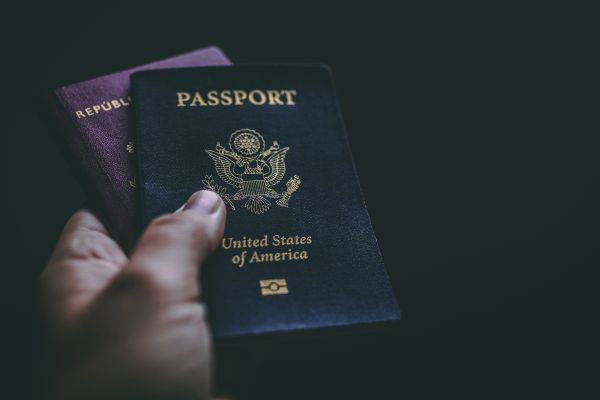
Let’s start with what hasn’t changed. The U.S. government has not implemented any policy changes regarding dual citizenship, and the United States continues to recognize that individuals may hold citizenship in more than one country. There is no crackdown, no new restrictions, and no requirement to renounce either citizenship.
The United States has long recognized and permitted dual citizenship. There is no U.S. law prohibiting dual or multiple citizenships. This position has been reinforced by multiple Supreme Court decisions that have established fundamental protections for American citizenship.
In the landmark case Afroyim v. Rusk (1967), the Supreme Court ruled that a U.S. citizen cannot be involuntarily stripped of citizenship simply for voting in a foreign country or acquiring foreign nationality. The Court reaffirmed this principle in Vance v. Terrazas (1980), holding that intention to relinquish citizenship is key—citizenship cannot be lost without clear, voluntary intent.
These aren’t minor legal technicalities. They represent foundational constitutional protections that cannot be easily overturned by ordinary legislation.
The Philippine Dual Citizenship Law: How It Works
For Filipino-Americans, understanding Republic Act No. 9225 (the Citizenship Retention and Re-acquisition Act of 2003) is essential. When you naturalize as a U.S. citizen, you typically lose your Philippine citizenship because you take an oath of allegiance to the United States. However, R.A. 9225 allows former natural-born Filipinos who became naturalized U.S. citizens to reacquire or retain their Philippine citizenship by taking an Oath of Allegiance before a Philippine consulate.
Critically, taking this oath and reacquiring Philippine citizenship does NOT constitute intent to renounce your U.S. citizenship. The act of obtaining dual citizenship through R.A. 9225 is lawful under both Philippine and U.S. law.
The benefits of maintaining Philippine dual citizenship are substantial. You can stay in the Philippines indefinitely without visa concerns, own land without restrictions, vote in Philippine elections if you establish local residence, work and do business in the Philippines without restrictions, and your foreign spouse may enter the Philippines visa-free for one year.
The Proposed Legislation: What’s Actually Being Considered
While current law protects dual citizenship, two bills introduced in Congress in 2025 have raised concerns:
1. The Exclusive Citizenship Act of 2025 (S.3283) – Introduced by Senator Bernie Moreno of Ohio in December 2025
This bill would make it so that no one may be a citizen or national of the U.S. while simultaneously having any foreign citizenship.If passed, the legislation would require current dual citizens to submit a written renunciation of either their foreign citizenship or their U.S. citizenship within one year of enactment. Those who fail to comply would be deemed to have voluntarily relinquished U.S. citizenship.
The bill also provides that any U.S. citizen who voluntarily acquires foreign citizenship after the law’s enactment would automatically be deemed to have relinquished U.S. citizenship.
2. The Disqualifying Dual Loyalty Act of 2025 (H.R. 5817) – Introduced by Congressman Randy Fine of Florida in October 2025
This legislation prohibits individuals who hold foreign citizenship from serving in the United States Congress .Under this bill, any candidate for the U.S. House of Representatives or U.S. Senate must renounce any foreign citizenship before being elected to serve. This measure is narrower in scope—it affects only those seeking congressional office, not the general population.
Why These Bills Are Unlikely to Become Law
Despite the alarming language in these proposals, multiple factors suggest they face significant obstacles to passage:
Constitutional Barriers
The Fourteenth Amendment guarantees that all persons born or naturalized in the United States are citizens, and the Supreme Court has repeatedly affirmed that this citizenship cannot be taken away by the government as a punishment or policy choice. As Democrats Abroad noted in their statement, Congress cannot overrule the Constitution by statute, and the Exclusive Citizenship Act would collapse immediately under judicial review.
Legal experts have identified multiple constitutional problems with Senator Moreno’s bill. Courts expect legal challenges from civil-rights groups and affected individuals if the bill were enacted, and courts could delay or block key provisions pending review.
Lack of Political Support
The proposal was introduced by a single senator and has not gained bipartisan momentum, with legislative forecasting models putting the probability of enactment at roughly 3% .The bill has been referred to the Senate Committee on the Judiciary, where it currently sits with no scheduled hearings and no indication of movement.
Neither the Trump administration nor Republican leadership has endorsed these proposals. In fact, implementing such legislation could create political complications for the administration itself, as First Lady Melania Trump and her son Barron Trump both maintain dual citizenship with Slovenia.
Administrative Impossibility
The U.S. consular system cannot process the millions of renunciation cases the dual citizenship bill would require, making the proposal effectively impossible to implement. This administrative burden alone makes compliance virtually impossible within the proposed one-year timeframe.
Implementing a forced-choice regime for millions of dual nationals would require massive administrative systems for verification, notifications, appeals, and cross-checking with foreign governments—infrastructure that simply doesn’t exist.
The Social Media Misinformation Crisis
The Philippine Embassy has repeatedly warned the Filipino community not to make serious, irreversible legal decisions based on unverified social media content. In October 2025, when another viral video falsely claimed a dual citizenship crackdown was underway, the Embassy issued a clear statement: “This is not true.”
The Embassy’s guidance has been consistent: always verify information through official Philippine Embassy website (philippineembassy-dc.org), U.S. Citizenship and Immigration Services (uscis.gov), and qualified immigration attorneys.
Why does misinformation spread so easily? Social media algorithms amplify emotionally charged content, and fear spreads faster than facts. Videos claiming imminent crackdowns generate clicks and shares, regardless of their accuracy. Some content creators may not intend to mislead—they may genuinely misunderstand proposed legislation—but the effect is the same: unnecessary panic.
The Bigger Picture: Immigration Enforcement Context
It’s important to understand why these proposals have emerged now. The current administration has pursued aggressive immigration enforcement policies, including mass deportation operations and significantly increased visa revocations. In this climate, proposals like the Exclusive Citizenship Act tap into broader nationalist sentiments about loyalty and allegiance.
However, there’s a critical distinction to make: aggressive enforcement of immigration laws against undocumented immigrants is very different from stripping citizenship from naturalized Americans who have followed all legal procedures. The constitutional protections for citizenship are among the strongest in American law precisely because the Founding Fathers understood the dangers of arbitrary denationalization.
What You Should Do Now: Practical Guidance
Given this complex landscape, here’s practical guidance for Filipino-Americans concerned about dual citizenship:
1. Do Not Renounce Your Philippine Citizenship Based on Fear
Renunciation of Philippine citizenship is a serious, irreversible legal action. Once done, you lose important rights including the right to own land in the Philippines, reside indefinitely without visas, vote in Philippine elections, work without employment restrictions, and pass citizenship to future generations.
The Philippine Embassy has been emphatic on this point: do not make legal decisions based on social media content or rumors. Current U.S. law fully protects your right to maintain dual citizenship.
2. Understand What Would Need to Happen for These Bills to Become Law
For either the Exclusive Citizenship Act or the Disqualifying Dual Loyalty Act to affect you, they would need to pass the Senate Judiciary Committee (for S.3283) or House Committee on House Administration (for H.R. 5817), be approved by the full Senate, be approved by the full House of Representatives, be signed by the President, and survive inevitable constitutional challenges in federal courts.
This process typically takes many months or years, if it happens at all. You would have substantial warning before any such law took effect.
3. Monitor Developments Through Official Sources Only
Follow information from official Philippine government sources (Philippine Embassy, Department of Foreign Affairs), official U.S. government sources (USCIS, State Department), reputable news organizations with legal expertise, and qualified immigration attorneys (tancinco.com).
Be skeptical of social media posts claiming urgent action is needed, especially those using alarming language, lacking citations to official sources, or asking you to share immediately. These are hallmarks of misinformation.
4. Document Your Citizenship Status
While no action is urgently required, it’s wise to maintain organized records of your citizenship documents, including your U.S. naturalization certificate, Philippine dual citizenship documents, passports from both countries, and records of when and how you acquired each citizenship.
5. Consult an Immigration Attorney If Seriously Concerned
If you have specific concerns about your situation—perhaps you work in a sensitive government position, are considering running for office, or have unique circumstances—consult with a qualified immigration attorney. They can provide personalized guidance based on your specific situation.
6. Understand the Legislative Process
Both bills are currently in the very early stages of the legislative process. The Exclusive Citizenship Act was introduced on December 2, 2025, and immediately referred to committee. The Disqualifying Dual Loyalty Act was introduced on October 24, 2025. Neither has had hearings, votes, or any movement beyond introduction.
According to legislative tracking, thousands of bills are introduced in Congress each session, but only a small fraction become law. Bills that face constitutional challenges have an even lower success rate.
7. Stay Connected with Community Organizations
Filipino-American community organizations, advocacy groups, and legal aid societies are monitoring these developments. They can provide updates, organize responses if needed, and connect you with legal resources. Community solidarity is a strength—you’re not alone in navigating this.
Weighing the Options: A Framework for Decision-Making
If despite all of this information you’re still considering renouncing your Philippine citizenship, here’s a framework to help you make an informed decision:
Ask Yourself:
- Is there an actual, current law requiring me to renounce? (Answer: No)
- Have official government sources (not social media) confirmed a change? (Answer: No)
- What would I lose by renouncing Philippine citizenship? (Answer: Property rights, residence rights, voting rights, family connections, future flexibility)
- What would I gain by renouncing now versus waiting? (Answer: Nothing—you can always renounce later if a law actually passes and survives judicial review)
- Am I acting out of fear or based on facts? (Be honest with yourself)
- Have I consulted with a qualified attorney about my specific situation? (If not, do this before taking irreversible action)
The Benefits of Waiting:
By maintaining your dual citizenship status while these bills work through Congress, you preserve all your options. If a law eventually passes and survives court challenges (which experts consider unlikely), you would still have time to make an informed decision. But if you renounce now and no law ever takes effect, you’ve made an irreversible decision based on speculation.
The Principle at Stake
Beyond the practical considerations, there’s a principle worth understanding. The concept that American citizenship can be involuntarily taken away—particularly from naturalized citizens who have fulfilled all legal requirements—runs counter to fundamental constitutional protections that have been in place since the founding of the republic.
The Supreme Court has repeatedly recognized that citizenship is precious and cannot be lightly taken away. This isn’t a Republican or Democratic position—it’s a constitutional principle that transcends partisan politics. While administrations and Congresses change, constitutional protections remain.
Looking Forward
The debate over dual citizenship reflects broader tensions in American society about immigration, national identity, and what it means to be an American in an increasingly interconnected world. These are legitimate policy debates that deserve thoughtful discussion.
However, policy debates should not drive naturalized citizens to make fear-based, irreversible decisions about their legal status. The system includes deliberate checks and balances—committee review, floor debates, votes in both chambers, presidential signature, and judicial review—precisely to prevent hasty, unconstitutional changes to fundamental rights.
For Filipino-Americans, maintaining dual citizenship under current law is a benefit, not a liability. It allows you to maintain connections to your heritage, support family members in the Philippines, conduct business, own property, and preserve cultural ties—all while exercising your full rights as American citizens.
Conclusion: Stay Informed, Stay Calm, Stay Connected
The key message is this: dual citizenship remains legal, protected, and recognized under current law. Proposed legislation faces significant constitutional, political, and practical barriers. The likelihood of these bills becoming law in their current form is extremely low. If somehow they did pass and survive judicial review, you would have substantial warning and time to respond.
Do not let fear-driven social media posts push you into making irreversible decisions. The Philippine Embassy’s guidance is clear: renunciation of citizenship is serious and should only be undertaken after careful consideration, professional legal consultation, and based on current law—not proposed legislation that may never take effect.
Verify information through official sources. Consult qualified attorneys if you have concerns. Stay connected with your community. And remember: your dual citizenship is a bridge between two countries you call home, not a burden to be discarded at the first rumor of trouble.
The Filipino-American community has weathered many challenges throughout its history in the United States. This moment calls not for panic, but for informed engagement, community solidarity, and trust in the constitutional protections that safeguard all Americans’ citizenship rights.
For Legal Consultation:
If you need personalized guidance about your dual citizenship status or have concerns about these legislative proposals, please contact our office for a confidential consultation with an experienced immigration attorney.